

“Trust Me Bro” Cryptography Is Not Enough. That Is Exactly Why Qastle Exists.
Bitcoin Magazine
“Trust Me Bro” Cryptography Is Not Enough. That Is Exactly Why Qastle Exists.
At Bitcoin 2026 in Las Vegas, Qastle Wallet became part of the main-stage conversation.
On April 29th, during a lunchtime panel on quantum risk, a senior protocol engineer at Anduro described Qastle Wallet as an example of “trust me bro cryptography.” The argument was that rising fear around quantum computing could create space for weak products, black boxes, and vendors selling broken solutions to anxious users.
That kind of criticism is serious. It deserves a serious answer.
So let’s start with the part we agree with: “trust me bro” cryptography is not enough. It never has been. Bitcoin exists because trust is not a security model. Self-custody exists because users should not have to rely on institutions to protect their assets. Good cryptography exists because evidence, implementation, and peer scrutiny matter more than slogans.
If any company claims to solve quantum risk with a mystery box, the industry should reject it. If any wallet asks users to give up control of their keys while pretending to preserve self-custody, the industry should reject it. If any project uses quantum language as a fear-based sales tactic without explaining the architecture, the industry should reject it.
That is not what Qastle is doing.
The simple version is this: Qastle is not selling “trust me bro.” Qastle is generating keys with true entropy and using post-quantum cryptographic principles, including NIST-standardized PQC algorithms, to strengthen how wallet security is built and evolved.
The aim is to build a wallet architecture that can be examined, challenged, improved, and adapted as the threat landscape changes.
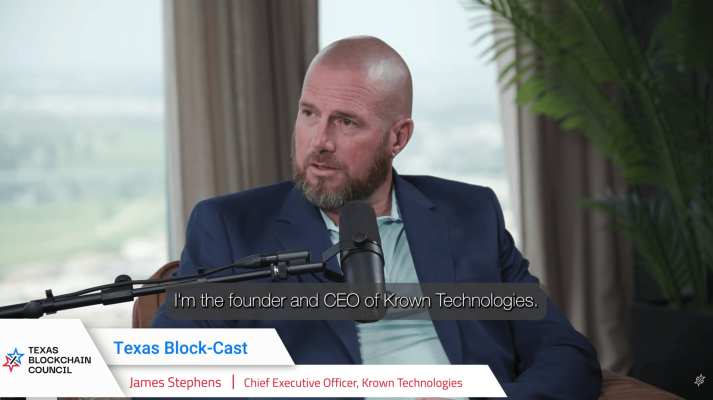
“At Bitcoin 2026, Qastle was called out from the main stage. That is fine. We are here for the hard questions. Now let’s have the serious conversation.” – James Stephens CBE CCFI, Founder & CEO, Krown Technologies Inc.
The criticism helped clarify the standard
The main-stage criticism at Bitcoin 2026 was inaccurate in how it described Qastle, but useful in one respect: it put the right standard into public language.
No “trust me bro” cryptography.
Agreed.
So let’s apply that standard properly. If a wallet claims to be non-custodial, ask how keys are generated, stored, and controlled. If a product mentions QRNG, ask where entropy enters the architecture. If a project references PQC, ask which standards and which migration path. If a company claims quantum security, ask what is implemented now, what is being tested, what is on the roadmap, and what can be reviewed.
And if someone dismisses all quantum-security work as fearmongering, ask how they propose to handle NIST standards, Google’s 2029 migration timeline, public-key exposure, wallet-level risk, and the reality that cryptographic migration takes years.
So let me dive into just two of the key aspects here: why PQC matters, and why not all sources of entropy are good enough.
The tech is hard, but the principle is simple
One of the best explanations I have heard came during our live Qastle Wallet AMA at Bitcoin 2026, when long-term Krown partner Sam Tseitkin, CEO ExeQuantum, was asked by a member of the audience to explain the quantum threat in plain English.
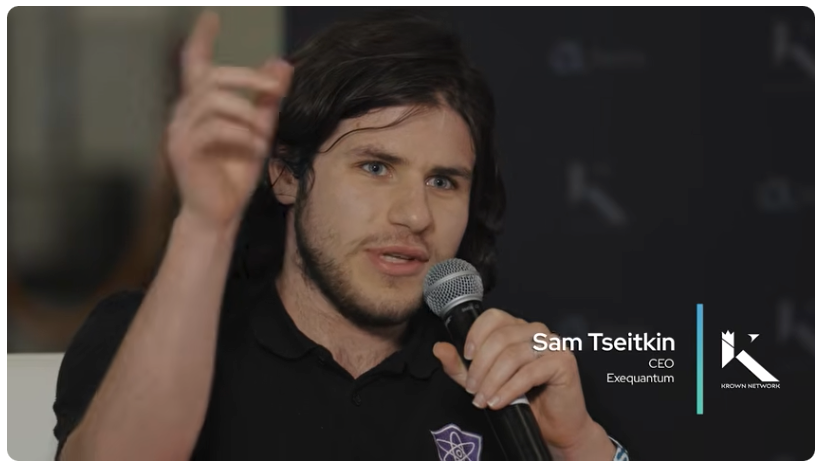
Sam used RSA as a simplified example. In public-private key cryptography, he explained, there is “a public key and a private key.” Oversimplified, the public key can be thought of as a very big number, while the private key is two smaller numbers multiplied together to make the big number. A classical computer trying to derive the small numbers from the big number has to brute-force the problem, which could take “billions of years.” But a future quantum computer could solve that in minutes.
That is the important point. Quantum computers are not just faster laptops. They can use different algorithms against certain mathematical problems. As Sam put it, “the world got quite unlucky” that one of the things quantum computers can do well is attack the kind of mathematics used in public-key cryptography and digital signatures for blockchains.
This is why post-quantum cryptography matters. It introduces different mathematical structures that, based on current knowledge, are not vulnerable to the same known quantum attacks.
Sam described lattice-based approaches with a simple map analogy: imagine a map with a start point and an end point. That map is a huge grid of points with a starting point (the public key) and many steps ‘vertices’ to reach the end point (the private key). Discovering the end point (private key) from a given starting point (public key) is very hard even for quantum computers. Plus, in practice the problem is not two-dimensional, it can involve “hundreds of dimensions.”
Entropy is not a black box. It is a foundation.
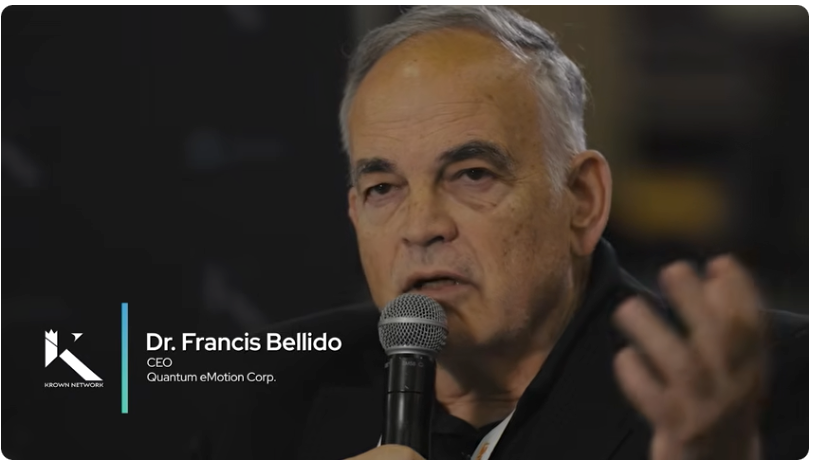
The on-stage criticism of Qastle seemed to imply that generating a strong secret key is suspicious in itself. That misunderstands a basic fact of cryptographic security: randomness matters.
A private key is only as strong as the process that creates it. Weak randomness can compromise strong cryptography before a user ever signs a transaction.
Through Krown’s long relationship with Quantum eMotion (NYSE:QNC CVE:QNC), Qastle has exclusive access to QRNG technology based on quantum tunnelling effects. In plain English, this means randomness generated from a physical quantum process rather than a deterministic software process. This true entropy can then support cryptographic key-generation and security processes.
Dr. Francis Bellido, CEO of Quantum eMotion, explained during a live Qastle Wallet AMA that classical systems are deterministic, which means they can contain patterns. Attackers look for patterns because patterns create vulnerabilities. Quantum eMotion’s approach is to introduce “complete unpredictability” by exploiting the quantum tunnel effect.
The 2025 Nobel Prize in Physics recognized macroscopic quantum mechanical tunnelling and energy quantisation in an electric circuit. Bellido’s point was not that “quantum” is a buzzword, but that Quantum eMotion’s patented QRNG technology applies quantum tunnelling to cybersecurity as a source of true entropy, and Krown has the exclusive rights to use this entropy for key generation.
Qastle is here for the hard questions
Krown is not claiming that Qastle Wallet alone solves the post-quantum transition for Bitcoin. No wallet can honestly claim that. Bitcoin’s long-term cryptographic future will require deep technical work, careful community debate, standards alignment, and migration planning.
But the wallet layer matters now. Entropy matters now. User behavior matters now. Authentication matters now. Crypto agility matters now.
That is why Qastle exists, and why thousands of our paying customers have chosen us.
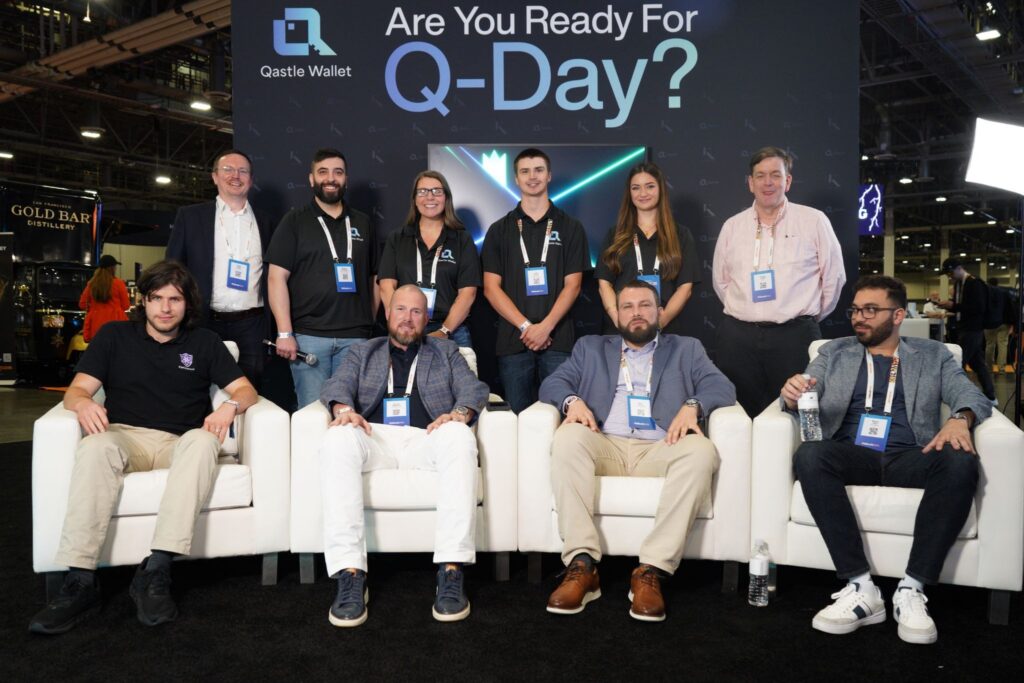
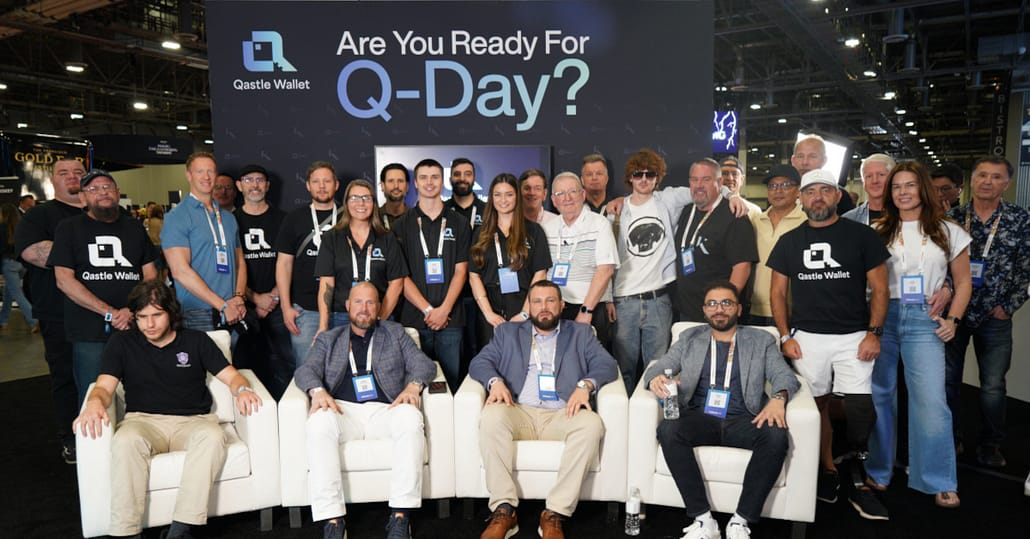
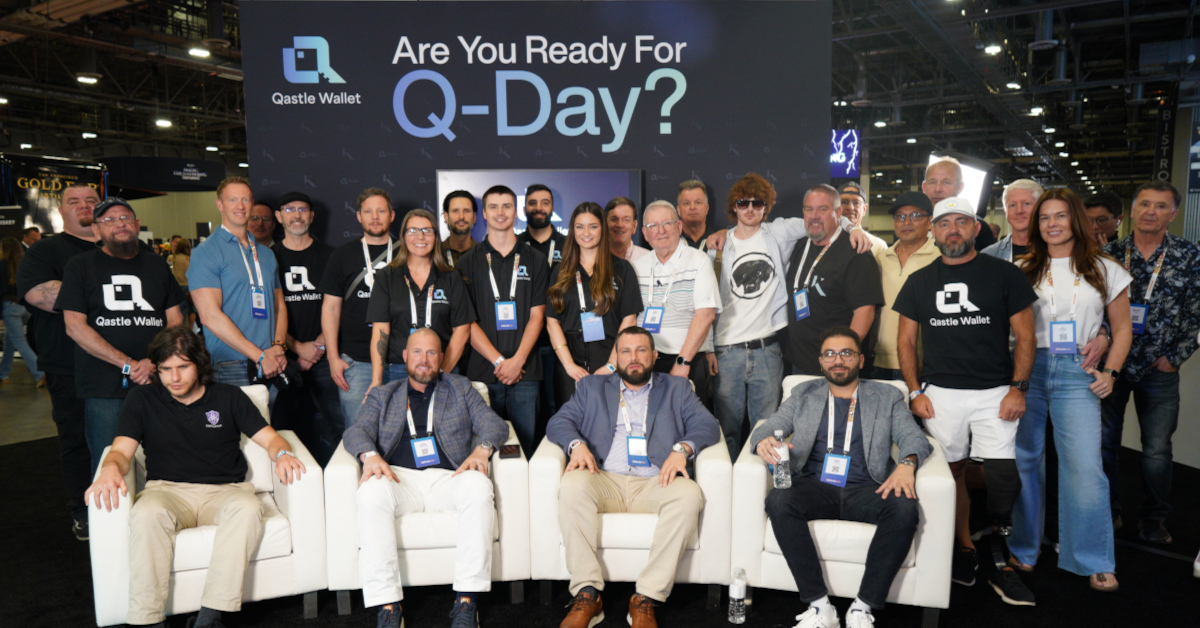
The Qastle wallet team pictured on their booth at Bitcoin 2026 at the Venetian in Las Vegas.
Let me close by mentioning our team – they are devoted to building for a world where digital assets are taken seriously as long-term financial infrastructure. In that world, security cannot depend on yesterday’s assumptions. It has to be designed for the threats already visible on the horizon.
So yes, reject “trust me bro” cryptography. Reject black boxes. Reject vague claims. Reject fear-based marketing. Reject any product that weakens self-custody while pretending to protect it.
But also reject complacency.
The future of digital asset security will not be built by people shouting “trust me.” It will be built by people willing to do the work, explain the architecture, accept scrutiny, and keep improving as the threat landscape changes. Krown’s recent achievement of ISO/IEC 27001:2022, our new cryptographic risk audit platform QorTrace.com and our social platform BLOQSocial.com are just three examples of how we walk the walk daily.
At Bitcoin 2026, Qastle was called out from the main stage.
That is fine.
We are here for the hard questions. Keep them coming!
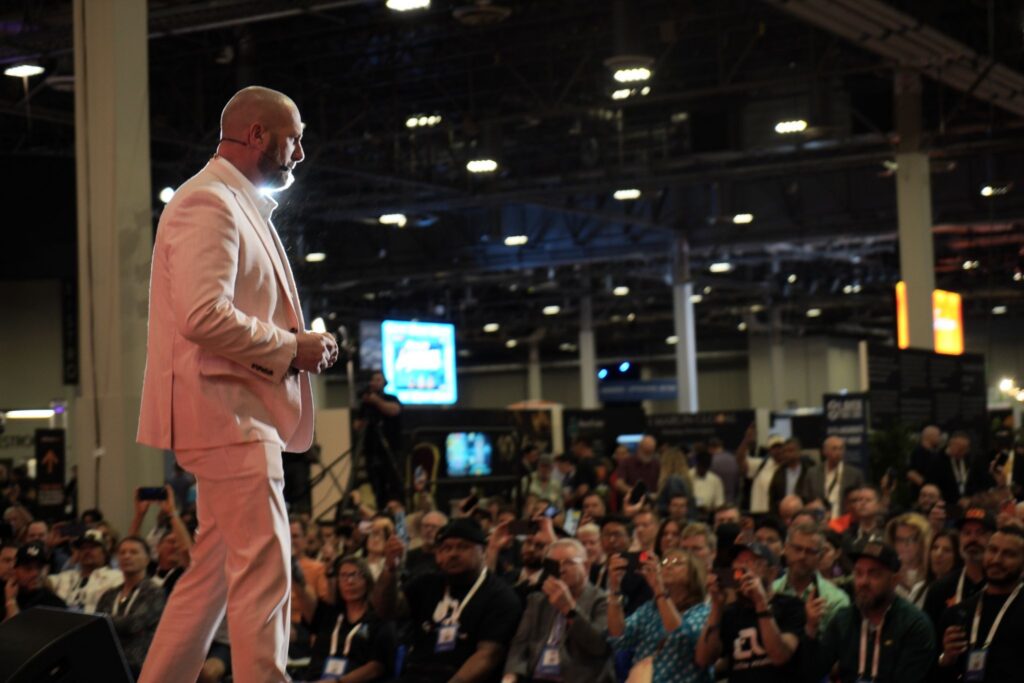
“We are here for the hard questions. Keep them coming!” – James Stephens, Founder & CEO Krown Technologies Inc., pictured speaking on the Genesis stage, April 28th 2026 at the Bitcoin Conference at the Venetian in Las Vegas.
Editorial Note: This article is a response from Qastle Wallet/Krown Technologies to comments made during a Bitcoin 2026 main-stage panel in Las Vegas regarding quantum risk and wallet security. The relevant discussion can be viewed in the linked Bitcoin 2026 panel recording. Bitcoin Magazine is publishing this response in the interest of allowing companies publicly referenced during conference programming to address criticism directly. The views expressed are those of the author and do not necessarily reflect the views of Bitcoin Magazine.
This post “Trust Me Bro” Cryptography Is Not Enough. That Is Exactly Why Qastle Exists. first appeared on Bitcoin Magazine and is written by James Stephens CBE CCFI.
Source: Read More