

Building FUN! on Bitcoin: Parker Day and Casey Rodarmor Talk Collaboration and the Future of On-Chain Art and Auctions
Bitcoin Magazine
Building FUN! on Bitcoin: Parker Day and Casey Rodarmor Talk Collaboration and the Future of On-Chain Art and Auctions
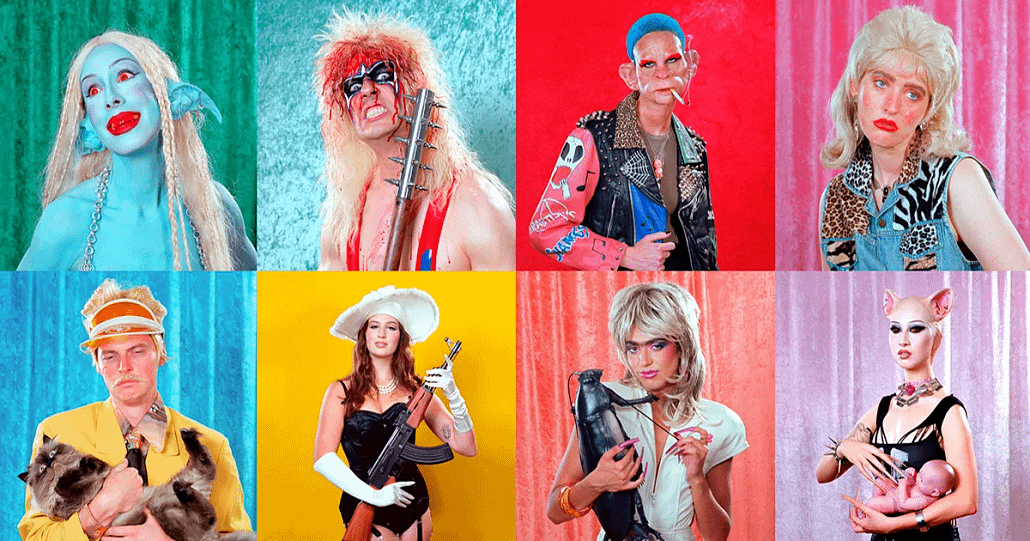
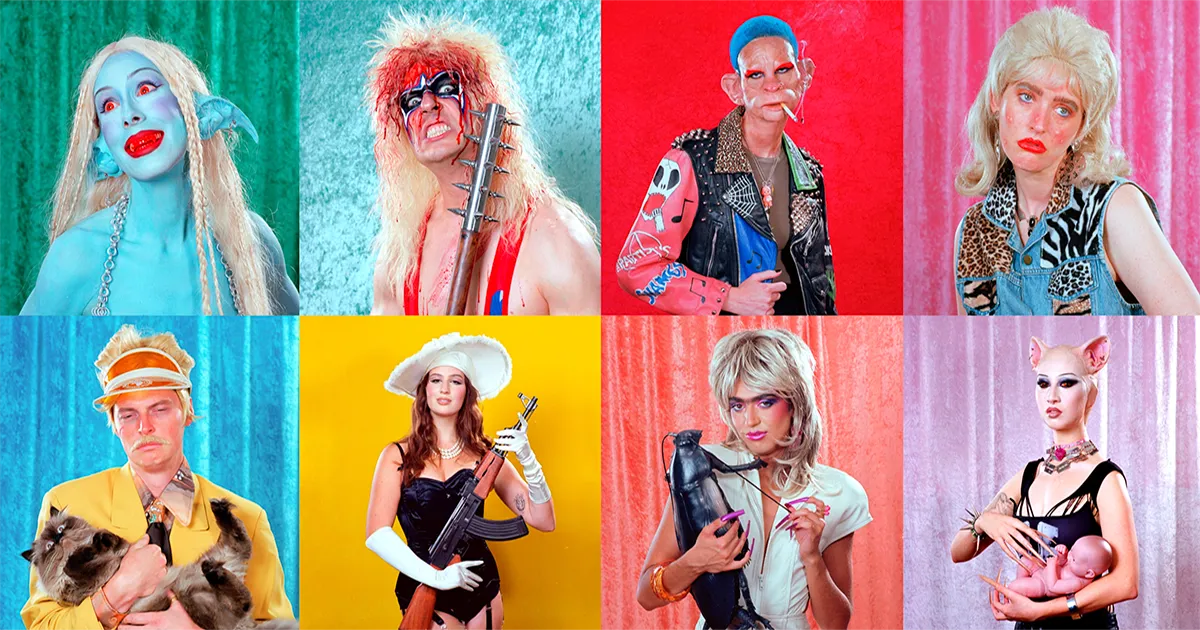
Parker Day and Casey Rodarmor’s FUN! Collection is an unprecedented synthesis of photographic maximalism and protocol-level innovation—a work that stands alone within the landscape of Bitcoin-native art. Saturated with Day’s bold color palette, surreal personas, and layered identity play, the collection is anchored by Rodarmor’s foundational role as the creator of the Ordinals protocol. Most notably, the series is inscribed directly under Inscription 0—the first inscription ever made using the Ordinals Protocol—marking it as an ontological outlier in the digital art canon. No other collection occupies this same foundational location on-chain, making FUN! a conceptual and technical landmark in Ordinals history.
Now expanded with new reflections from both collaborators, this interview explores the project’s deeper ideological dimensions—from the mechanics of trustless auctions to the ethics of artistic compensation, from pro wrestling and portraiture to capitalist generosity and the social roots of value. Together, Day and Rodarmor form a rare creative pairing: artist and dev, photographer and protocol architect, equal parts absurdity and rigor.
One of the collection’s most iconic works—featuring Rodarmor himself—is set to headline the Megalith.art auction, a Bitcoin-native sale structure that concludes on June 3rd and will be showcased at both Bitcoin 2025 in Las Vegas and its satellite event, Inscribing Vegas. The piece anchors a broader lineup that includes standout contributions from leading digital artists such as Post Wook, Coldie, Ryan Koopmans, FAR, Rupture, and Harto.
It’s less an interview than a glimpse into a high-voltage collaboration:
Parker, your photography is known for its bold color, eccentric characters, and fearless exploration of identity and persona. How did this collaboration with Casey come about, and what visual or cultural influences helped shape The FUN! Collection?
PARKER: Casey and I have known each other since high school. You could even say he was one of my first models—I shot his portrait for my sophomore year darkroom photography class. We kept in touch over the years, and in 2017 he encouraged me to turn my ICONS series into crypto art. I passed on that at the time, but in 2021 I did release an Ethereum NFT collection of ICONS. Right after that, Casey called me and said, “Yo! You need to go even bigger! Do 10k!” And I’m like, “You know these are all unretouched and shot on film, right?” But with his encouragement and funding, we figured out how to produce 1,000 unique portraits.
The visual and cultural influences behind FUN! are too numerous to name—just a mishmash of pop culture that’s been stewing in my brain since childhood.
The FUN! collection was released under a CC0 license, meaning anyone can reuse, remix, or recontextualize the work without restriction. In a project so rooted in persona, authorship, and performance, what led you to make that decision—and how do you think about authorship or artistic control in the context of open licensing on Bitcoin? What would you find interesting to see done with the collection beyond your original photography methodology? What kinds of reinterpretations or mutations of the collection would genuinely intrigue you?
PARKER: I love it. As an artist, once you create something and it leaves the studio, it’s out of your hands. The audience shapes the work in their own interpretations. You have no control over it. It seems silly to say “this is my IP, you can’t do anything with it.” We live in a world of memes, of reproduction ad infinitum. It seems anachronistic in today’s world to clutch copyright with an iron fist. And it’s perfectly in keeping with the ethos of Bitcoin to make the work CC0. In terms of value, the inscriptions are the scarce collectibles. Even more so than any editioned prints will ever be. Their inscriptions’ provenance is on chain, directly descended from inscription 0.
There’s nothing in particular that I’d like to see or not like to see done with FUN! I just hope people find meaning in it, and make meaning from it.
You two have an unusual creative relationship: artist and protocol dev, patron and co-conspirator. Casey, you basically invented a new medium to support Parker’s work. What does it mean to build something enduring together in a space that often prizes individualism?
CASEY: I love it. I mean—I really love it. Parker and I are super complementary. We each have our own strong wheelhouses, and we’re always engaging with each other’s work, but in this very chill, supportive way.
Like, when we’re shooting, I’ll tell her what I think looks cool or what might work well in the collection—but it’s never directive. It’s more like, “Hey, here’s some data. Do with it what you will.” And same goes for the technical stuff. We’ll talk about metadata, domains, the website layout—she gives me her thoughts, and it’s just… input. Take it or leave it.
We’re both so solid in our own lanes that it makes collaboration easy. There’s no weird insecurity. She’s the creative force behind the collection—I know that. I’m the technical backbone—and she knows that. That kind of clarity makes it fun.
And honestly, I’m just really proud of this partnership. We’ve been in each other’s lives in a positive way for so long—since high school. Parker’s given me Bitcoin haircuts. I was bugging her to do NFTs in 2017. Even when we’d go long stretches without talking, we always checked back in.
“Hey, how’s it going?”
“Saw you on Twitter.”
“Saw you on Instagram.”
It’s just one of those great, long-running collaborations that’s rooted in mutual respect—and a shared willingness to go weird.
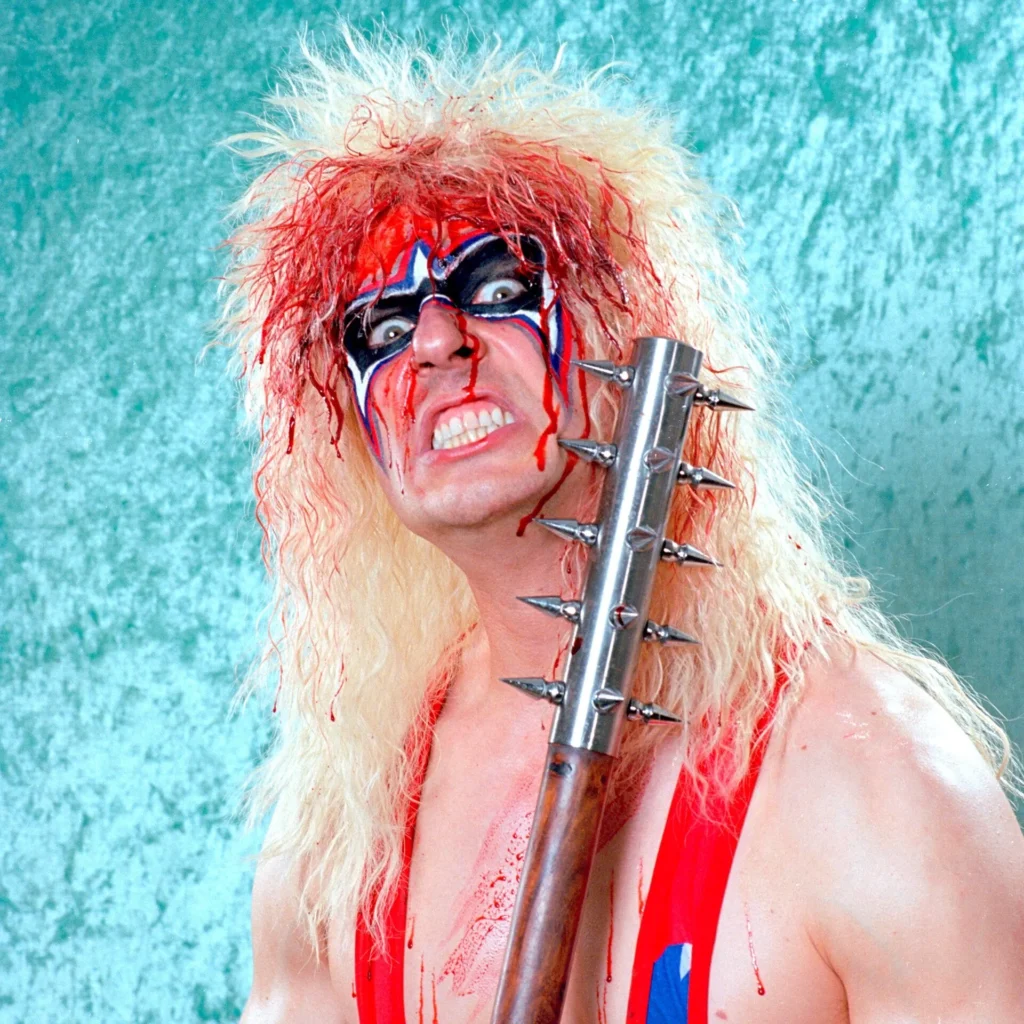
Casey, did you draw on any past modeling experience—or take notes from Raph? And what was it like working under Parker’s direction: more Kubrick or camp counselor?
CASEY: I think I was pretty self-directed for the shoot. I wasn’t drawing on past modeling experience exactly—more like theater kid energy. I’ve always loved professional wrestling. It’s incredibly cool… and also incredibly formulaic, so I get bored if I watch too much. But every couple of years, I check back in, see what the storylines are.
For this shoot, I knew exactly how I wanted to ham it up—like a professional wrestler. That wild, sweaty, insane energy. The spiked ball pressed against my face. All the weird faces. American pro wrestling is super operatic, honestly.
The character I was channeling? Mostly Ultimate Warrior. Parker really nailed the eyes—those classic, intense Ultimate Warrior eyes. He wore wild makeup and had that jacked-up look. Ric Flair was another influence—mainly for the hair. He had this long blond hair, and when it got bloody in the ring, it looked insane.
As for Parker—definitely more camp counselor than Kubrick. She sets the scene: everything ready, hair and makeup dialed, wardrobe laid out. We talked through the costumes a bit. She’ll give direction, a few hints here and there—but it’s really up to the model to bring it.
You can include that (Casey snaps his fingers.)
Yeah. You know? You know.
The FUN! collection features an interactive website where visitors can filter portraits by mood, prop, background color—even astrological sign. What inspired that kind of functionality?
PARKER: Before FUN!, I had been thinking about an exhibition that grouped photos based on emotional expression. Even though the personas may appear wildly different, the core humanity is the same. I’ve always tried to equate disparate identities by shooting people in the same way—with simple fabric backdrops that strip away time and place.
The FUN! website (fun.film), reflects this idea: difference in sameness, or sameness in difference. It’s a tool for play—but also a way to reflect on identity in a fragmented age.
Casey, you’ve described yourself as a capitalist—but you’ve also given away tools for free and pursued an almost obsessive elegance in your work. How do you reconcile market belief with this ethic of generosity? And what does that tension mean for the future of Ordinals?
CASEY: There’s absolutely no tension—and that’s because most people just don’t understand what capitalism is. Like, I can’t even begin to unpack what people think capitalism means.
Capitalism simply means the means of production are privately controlled. That’s it. That’s the whole definition. The alternatives? You’ve got two: either (1) violent chaos, or (2) the government owns and allocates all capital. That’s it. Those are your three options.
So when people say they’re “anti-capitalist,” what they usually mean is: “I want the government to control who gets what.” I’m not about that. I’m a staunch capitalist. I allocate my own means of production—my computers, my resources, my energy—how I see fit, not how the state tells me to.
And sometimes? That allocation includes giving things away. That’s not anti-capitalist. If the government confiscated my stuff and handed it out? Sure, that’s anti-capitalist. But me choosing to make something—sometimes selling it, sometimes not—is 100% aligned with the spirit of capitalism.
People need to get with the program.
You asked about the tension between generosity and profit in Ordinals? There isn’t one. We’re social creatures. It’s great to make money—money’s fun. But the real magic is the people you meet along the way. You’re not gonna be on your deathbed wishing you made more money. You’ll wish you spent more time with people who matter.
The beauty of capitalism is that it gives us so much productivity that we can afford to be generous. You build so much surplus, you can finally do things that aren’t transactional—mentorship, gift-giving, weird creative stuff just because it feels good. That’s the bounty of capitalism. It enables non-market joy.
Honestly? The best moments in this space haven’t been about money. Yeah, the rare times I’ve made some have been fun. But the truly great stuff? The fun projects, the weird experiments, the friends. That’s the soul of it.
Like, if I had to live in some crummy little place—but had healthcare, enough to get by, and this incredible network of people and ideas—I’d take that any day over ten times the money and no friends.
So I hope the degens are listening.
Megalith.art’s auction model introduces a novel approach by leveraging atomic swaps for settlement. Could you elaborate on how this mechanism ensures trustless, on-chain finality for high-value digital art transactions, and how it contrasts with the delayed, custodial settlements typical of traditional auction houses like Sotheby’s or Christie’s?
CASEY: So, normally, when you swap goods—say you walk into a pottery store and want to buy a pot—you hand the guy a dollar. Now he’s got your money… but you don’t have the pot. He could just yell, “Get out!” and poof—you’re down a buck, no pottery.
Or maybe he gives you the pot first, but you don’t hand over the dollar. You run out the door. Same problem. This is what we’d call a non-atomic swap—one party has to trust the other to follow through.
Bitcoin changes that. With Bitcoin, you can set up atomic swaps. Meaning: the artist gives up the art and the buyer gives up the bitcoin, and either both things happen or neither do. Fully trustless.
It doesn’t guarantee the art will sell, but if it does, the artist definitely gets paid. And the buyer definitely gets the piece. No middlemen. No weird escrow.
What’s even better is that in this setup—like the way we’re doing it with Megalith—you can literally see the platform’s cut. It’s all baked in and visible. Super transparent. No funny business. It’s just… a great way to do things.
Megalith.art implements immediate, protocol-level split payments to artists and collaborators, minimizing KYC exposure and reducing reliance on centralized intermediaries. How does this system enhance transparency and efficiency in artist compensation compared to the conventional post-auction invoicing and payout processes?
CASEY: Yeah, the problem with traditional auctions is they’re just super opaque. Every artist ends up negotiating a different deal with the auction house. If you’re selling a high-value piece, maybe you can negotiate a better cut. But if you’re a newer artist—or your work sells for less—you’re probably giving up a bigger chunk.
What we’re doing here is way more transparent. It doesn’t mean you can’t do variable arrangements in theory—but in this case, everyone’s getting the same cut, and you can see that they’re getting the same cut. I think that matters—a lot.
I’ve done events before, usually VJing, and sometimes I’ve done it for free. Then I’d find out later that some of the DJs got paid, and I didn’t. That sucks. It just puts a bad taste in your mouth. Either everyone gets paid, or no one gets paid—especially if it’s supposed to be a volunteer thing. I feel pretty strongly about that.
Same goes for auctions. Some artists will sell for more than others—that’s fine. But they should all get the same percentage cut. That should be enforced on-chain, and it should be fully transparent.
With this system, you can actually see what each artist is getting from each auction. That’s how it should be.
See more from Parker and Casey at Inscribing Vegas on May 27th, and the Bitcoin Conference Las Vegas May 27–29th. Bidding for all Megalith.art auction lots concludes June 3rd.
Want to experience it in person? The Bitcoin Week pass gives you full access to both Bitcoin 2025 and Inscribing Vegas—plus top-tier afterparties: https://b.tc/conference/2025/bitcoin-week
This post Building FUN! on Bitcoin: Parker Day and Casey Rodarmor Talk Collaboration and the Future of On-Chain Art and Auctions first appeared on Bitcoin Magazine and is written by Dennis Koch.
Source: Read More